Stocking your online store with high-quality, desirable products is only part of building a successful and profitable online business. You also need to help shoppers discover your ecommerce website and find the items they want. That’s what ecommerce search engine optimization (SEO) makes possible.
As you’ll see in a bit, ecommerce SEO is pretty similar to general SEO, but there are a few elements unique to ecommerce that you’ll want to address to maximize site traffic and sell more products.
Search engine optimization takes a lot of time and effort, but fortunately, it’s absolutely possible to climb the search engine result pages (SERPs) and claim that number one spot on Google for the products you sell. By applying search engine optimization techniques to your online store, you can increase your visibility.
In this post, we’ll discuss what SEO is and how it helps ecommerce stores increase website traffic and revenue. We’ll then cover the SEO basics for ecommerce sites and show you the exact steps that will help more shoppers find your store.
What is SEO and why is it important?
Search engine optimization is the process of improving your website’s visibility on search engines like Google, Bing, and Yahoo when people are actively looking for what you sell.
This involves a few broad categories of work — we’ll call them technical SEO, content SEO, and off-site SEO.
Technical SEO involves fine-tuning your site’s performance, security, and navigation, part of your visitors’ experience. Content SEO relates to on-page and off-page keyword optimization, using your site visitors actually see. Off-site SEO is all about boosting your site’s reputation in the eyes of the search engines. How often people discuss and link to your site plays a role in where search engines place you in results.
This article will focus on content SEO, but we’ll get into some of the technical aspects too — such as site architecture — because there are particular elements related to ecommerce stores that can make a big impact.
We won’t talk much about off-site SEO in this article, but you can learn more about that later. It’s most important to focus on your site’s content and technical performance before investing heavily in any off-site efforts.
Your first step into the world of ecommerce SEO is to identify the initial pack of words and phrases that you want to rank for, called keywords. You’ll then use this list of keywords in your online store’s headings, image alt tags, and other prominent areas that we’ll discuss in more detail shortly.
Keywords are at the heart of SEO because these are the phrases people type when searching online to find or learn about something.
When your site naturally shows up as one of the results and someone clicks on it, this is known as organic traffic. It happens naturally because the search engine suggests your site as something helpful to the individual.
You can also show up when someone searches for a particular keyword by paying every time someone clicks on your site — this is known as pay-per-click (PPC).
While it’s a fast way to rank for desired terms, it’s going to be more profitable long-term to rank organically and receive “free” traffic over and over again.
How much can SEO impact your ecommerce site?
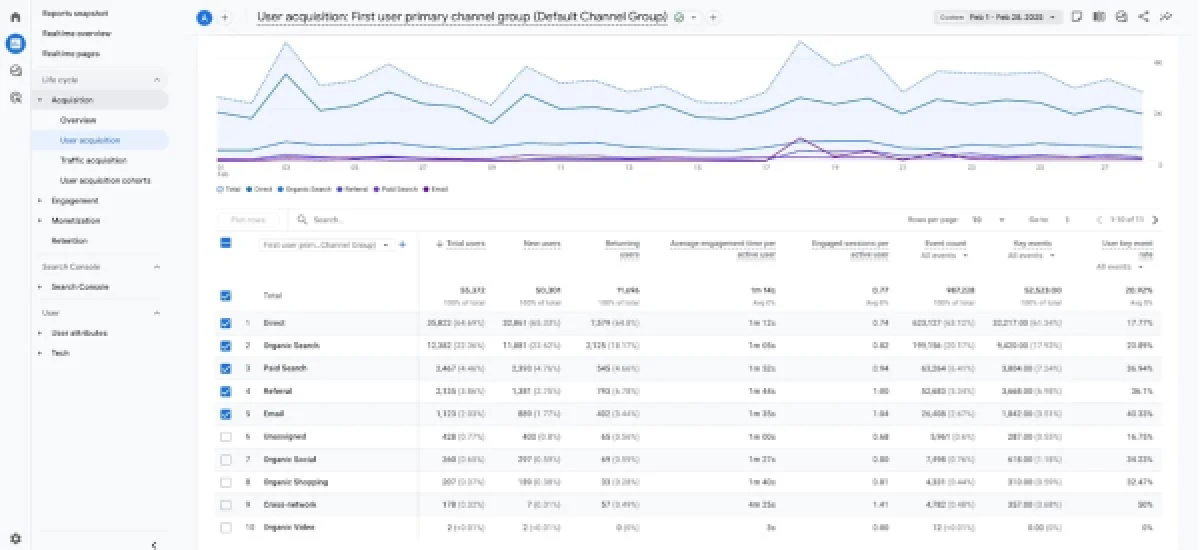
Use a search engine every month. And it’s estimated that Google users perform more than billion searches per month. Using a tool like Google Analytics, chances are that organic search will be a top acquisition source. Here’s a screenshot of some of the data you can see in Google Analytics: